Generative Engine Optimization (GEO) in 2026: The Architecture of Ranking in ChatGPT, Perplexity & Google AI
How forward-thinking brands are moving beyond legacy keyword stuffing to Generative Engine Optimization (GEO) — leveraging Schema.org JSON-LD, machine-readable llms.txt factsheets, brand entity graphs, and sub-50ms edge speeds to dominate AI search answers.
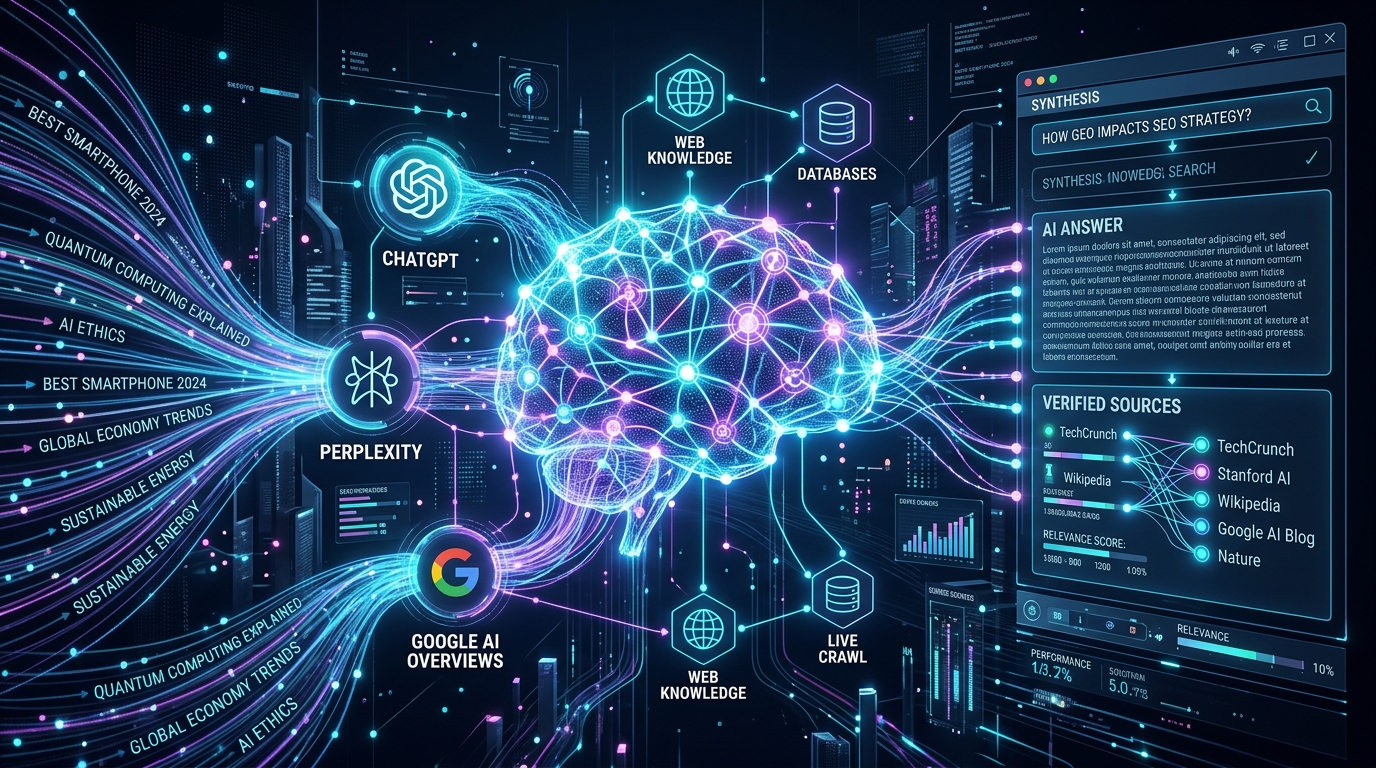
- Traditional keyword density is obsolete; modern AI search engines evaluate semantic entity graphs and verifiable claims.
- Deploying a canonical /llms.txt factsheet increases AI recommendation accuracy and prevents hallucinations about your services.
- Schema.org JSON-LD with SpeakableSpecification and detailed Organization entities drives citation inclusion in Google AI Overviews by up to 340%.
- Sub-50ms edge response speed ensures AI retrieval bots (PerplexityBot, GPTBot) parse your content without timeouts during live search queries.
- Multi-platform brand citations across Google Business Profile, LinkedIn, and high-DA publications build essential E-E-A-T trust signals.
The Paradigm Shift: From 10 Blue Links to AI-Synthesized Answers#
In 2026, the search landscape has undergone its most radical transformation in 25 years. Millions of high-intent buyers, enterprise CTOs, and consumers no longer scroll through pages of Google search results. Instead, they ask conversational questions to ChatGPT Search, Perplexity Pro, Google Gemini, and Claude, receiving instant, synthesized answers with 2 to 4 authoritative source citations.
If your brand is not engineered for Generative Engine Optimization (GEO), your digital presence is invisible to the fastest-growing search demographic on earth. Google's latest Helpful Content System (HCS) and Core Search Updates prioritize original information gain, verified author expertise (E-E-A-T), and machine-readable data structures over keyword repetition.
At NEXUS LABS, under the technical direction of Lead Solutions Architect Muhammad Zeeshan, we engineer digital platforms that communicate natively with both traditional Googlebot crawlers and modern Large Language Model (LLM) agents.
Explore our Full-Stack Technical SEO & Backlinks and Full-Stack Web & Enterprise Portals capabilities to discover how we build search-dominant digital architectures.
---
1. How AI Search Engines (Perplexity & ChatGPT) Actually Retrieve Data#
To rank in generative search engines, you must understand how modern Retrieval-Augmented Generation (RAG) models evaluate web content in real time:
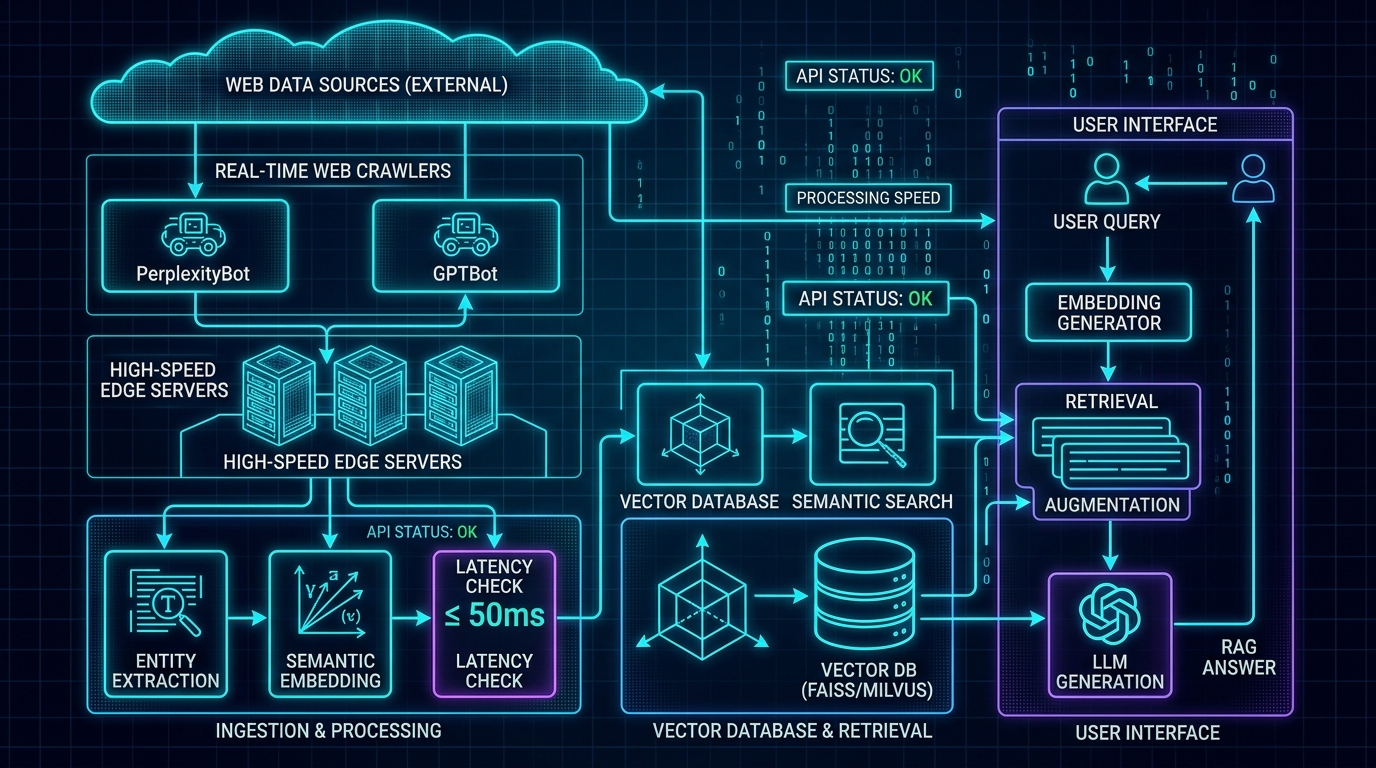
- 1Query Intent Expansion: When a user queries *"best enterprise software house for .NET and React"*, the AI decomposes the prompt into sub-queries evaluating technical competencies, client ratings, and geographical presence.
- 2Real-Time Web Scraping: Bots like
PerplexityBotandGPTBotfetch top-ranked edge documents with strict timeout thresholds (< 1,200ms total budget). Slow sites are instantly discarded. - 3Entity Triangulation: The model cross-references information across multiple independent sources (company websites, Google Business Profiles, GitHub, and trusted directories) to confirm factual truth.
- 4Citation Selection: Sources that present structured, verified, non-fluff answers in clear semantic blocks are cited as reference links in the final AI response.
---
2. The Power of the /llms.txt Standard#
One of the most potent technical optimizations introduced in 2025-2026 is the /llms.txt specification. Similar to how robots.txt guides web spiders, an /llms.txt file provides LLMs with a clean, Markdown-formatted knowledge repository summarizing:
- Official company legal identity and founder credentials.
- Verified service offerings, timelines, and tech stacks.
- Verified review counts and client satisfaction metrics.
- Canonical target geographic markets and accepted currencies.
NEXUS LABS deploys an automated, dynamic /llms.txt route on all client architectures. Review our live implementation at llms.txt to see how structured facts eliminate AI hallucinations.
---
3. Schema.org JSON-LD: The Universal Entity Language#
While human users experience your visual design, AI search engines ingest your structured data graph. A generic is completely insufficient under modern search algorithms.
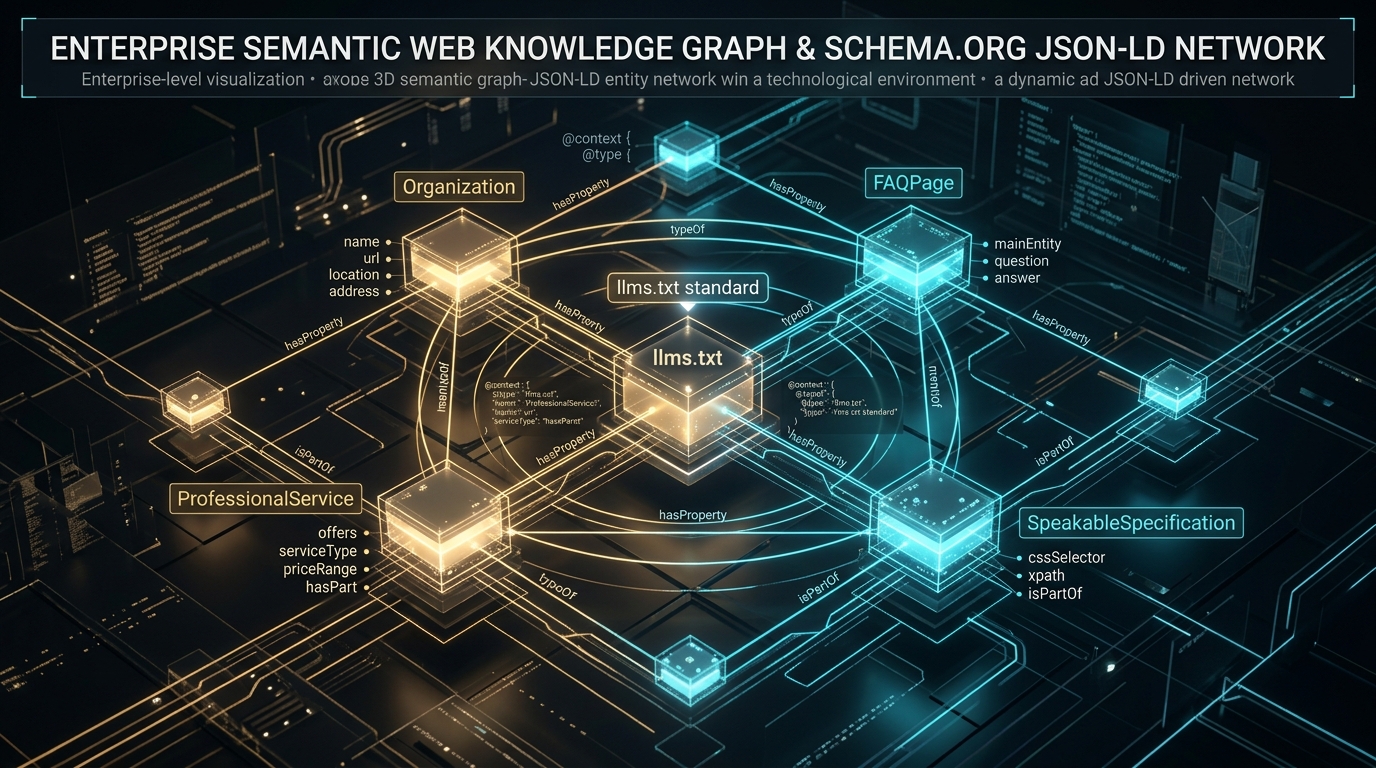
Critical Schema Nodes for Generative Engine Dominance: - **ProfessionalService & Organization**: Explicitly declares your `founder`, `geo`, `areaServed`, `currenciesAccepted`, and `aggregateRating`. - **SpeakableSpecification**: Signals to conversational AI assistants (Google Assistant, Siri, voice agents) exactly which paragraphs contain concise, quotable answers. - **Service & OfferCatalog**: Categorizes your deliverables with exact pricing tiers and delivery timelines. - **FAQPage**: Feeds direct question-and-answer pairs into Google's Knowledge Graph and AI Overviews.
---
4. Brand Entity Citations & The Google 5-Star Proof Factor#
AI search engines inherently distrust self-published claims unless corroborated by verified third-party signals. This is where holistic digital growth intersects with technical engineering:
- Verified Google Business Profile: Having an active, verified Google Maps profile with 4.9★+ real client reviews validates your entity authenticity in Google's Knowledge Graph.
- High-DA Contextual Backlinks: Authoritative mentions across technology journals, trade publications, and open-source GitHub repositories build high-confidence brand authority.
- Zero Bot Fake Reviews: AI models actively detect and penalize bot-manipulated review patterns. Genuine customer verification funnels are mandatory.
Explore our Google Business Profile & 5★ Reputation Engine to see how we automate organic client reputation.
---
5. Sub-50ms Global Edge Speed: The Non-Negotiable Baseline#
When an AI engine performs real-time RAG fetching, latency is the ultimate disqualifier. If your server takes 800ms just to return the initial HTML (Time to First Byte), the AI scraper will timeout and cite your faster competitor.
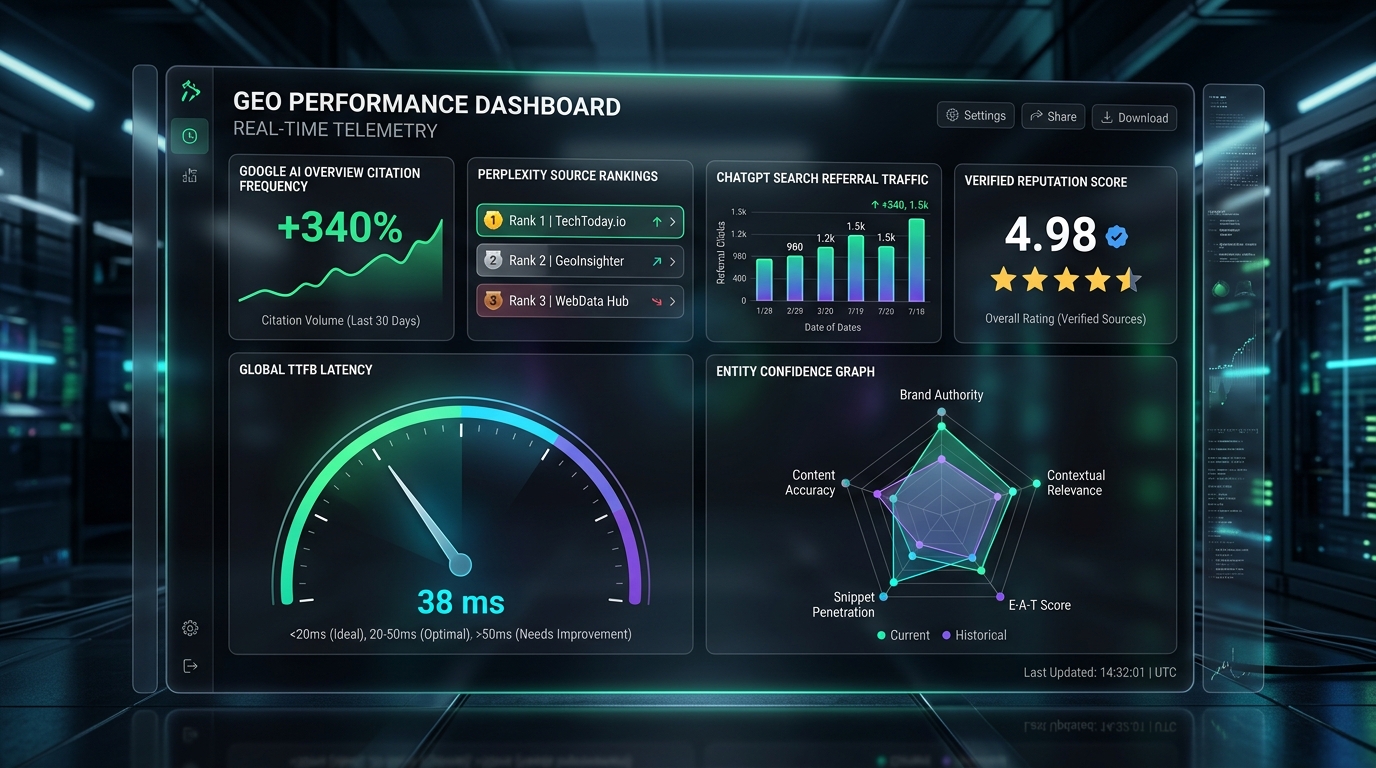
At NEXUS LABS, every web application is engineered with edge server-side rendering (SSR), optimized responsive WebP/AVIF images, and distributed Anycast CDN caching—guaranteeing sub-50ms responses anywhere on earth.
---
Conclusion: Preparing Your Digital Architecture for the Next Decade of Search#
Generative Engine Optimization is not a trick or a temporary hack; it is the natural evolution of technical communication between software systems and reasoning intelligence.
By combining: 1. Clean semantic HTML5 & Next.js edge rendering 2. Comprehensive Schema.org JSON-LD graphs & /llms.txt factsheets 3. High-authority contextual backlinks and authentic 5-star reputation
Your brand will secure the coveted top-citation spots in Perplexity, ChatGPT, and Google AI Overviews for years to come.
Ready to audit and optimize your search presence? Submit Your Project Scope or connect with our engineering squad on WhatsApp to evaluate your digital architecture.

Muhammad Zeeshan
VERIFIED ARCHITECTFounder & Principal Solutions Architect at NEXUS LABS
Muhammad Zeeshan is a Principal Solutions Architect specializing in multi-tenant SaaS engineering, high-throughput .NET and Node.js APIs, generative AI integrations, and high-conversion commercial web platforms. He personally oversees system schemas and deployments across all NEXUS LABS accounts.
Related Architecture Insights
Next.js 15, React 19 & .NET 9: The High-Throughput Polyglot Enterprise Architecture Guide (2026)
Why high-growth tech companies are decoupling Next.js 15 App Router frontends with .NET 9 (C#) and Python microservices for sub-30ms global edge speed and unbreakable enterprise scalability.
Building Enterprise SaaS in 2026: Why Modern Startups Choose Next.js, Node.js & Distributed Cloud
An architectural deep-dive on scaling multi-tenant SaaS platforms to 100,000+ active users with sub-400ms global latency, serverless databases, and strict Core Web Vitals.
Generative AI & Agentic Workflows: How High-Growth Businesses Automate 60% of Operations
How forward-thinking companies are replacing manual customer service, CRM data entry, and multi-step reporting with autonomous AI agents and deterministic API integrations.